When Maria was admitted to Croydon University Hospital following a fall at home, her daughter Audrey faced an overwhelming set of decisions. Maria, 85 years old and living alone in her bungalow, was presenting with delirium and had been found on the floor after a prolonged period. The hospital team had concerns about a possible stroke, and the family needed to find a care provider who could deliver round-the-clock support — quickly, safely, and with the clinical expertise that Maria's condition demanded.
What followed was a care journey that demonstrated not only the compassion and professionalism of Divine Health Services, but also the critical role that purpose-built technology played in ensuring Maria received consistent, transparent, and clinically excellent care from the very first day. This article explores how the DHS Care Platform enhanced every aspect of Maria's recovery — and why investing in technology is not a luxury, but a necessity in modern homecare.
The Challenge: Complex Needs, Tight Timelines
Maria's case was far from straightforward. She had been scored at level 5 on the Rockwood Frailty Scale (mildly frail), was experiencing episodes of delirium — seeing things that were not there, attempting to leave the ward, and becoming confused about her surroundings — and had a history of falls. The hospital team identified risks including further falls, wandering, dehydration, poor nutrition, and vulnerability to strangers.
Audrey needed a provider who could conduct a thorough assessment, produce a comprehensive care plan, and commence care within days — not weeks. As detailed in our full case study, Divine Health Services achieved exactly that: a registered nurse conducted a bedside assessment at the hospital at 7:00 PM on the same day the family reached out, a 22-page bespoke care plan was produced within five days, and care commenced on day six.
But the speed of response was only the beginning. What truly set Maria's care apart was the way technology underpinned every clinical decision, every carer visit, and every communication with the family.
"We believe that we really struck lucky having Divine Health Care for my husband who is bedridden and has dementia. All the carers who attend to him are very professional, safety conscious, kind, gentle and friendly. They are always on time and have never, ever let me down."
Audrey M
Wife of Client
Verified review from homecare.co.uk
Digital Care Plans: 22 Sections, Zero Ambiguity
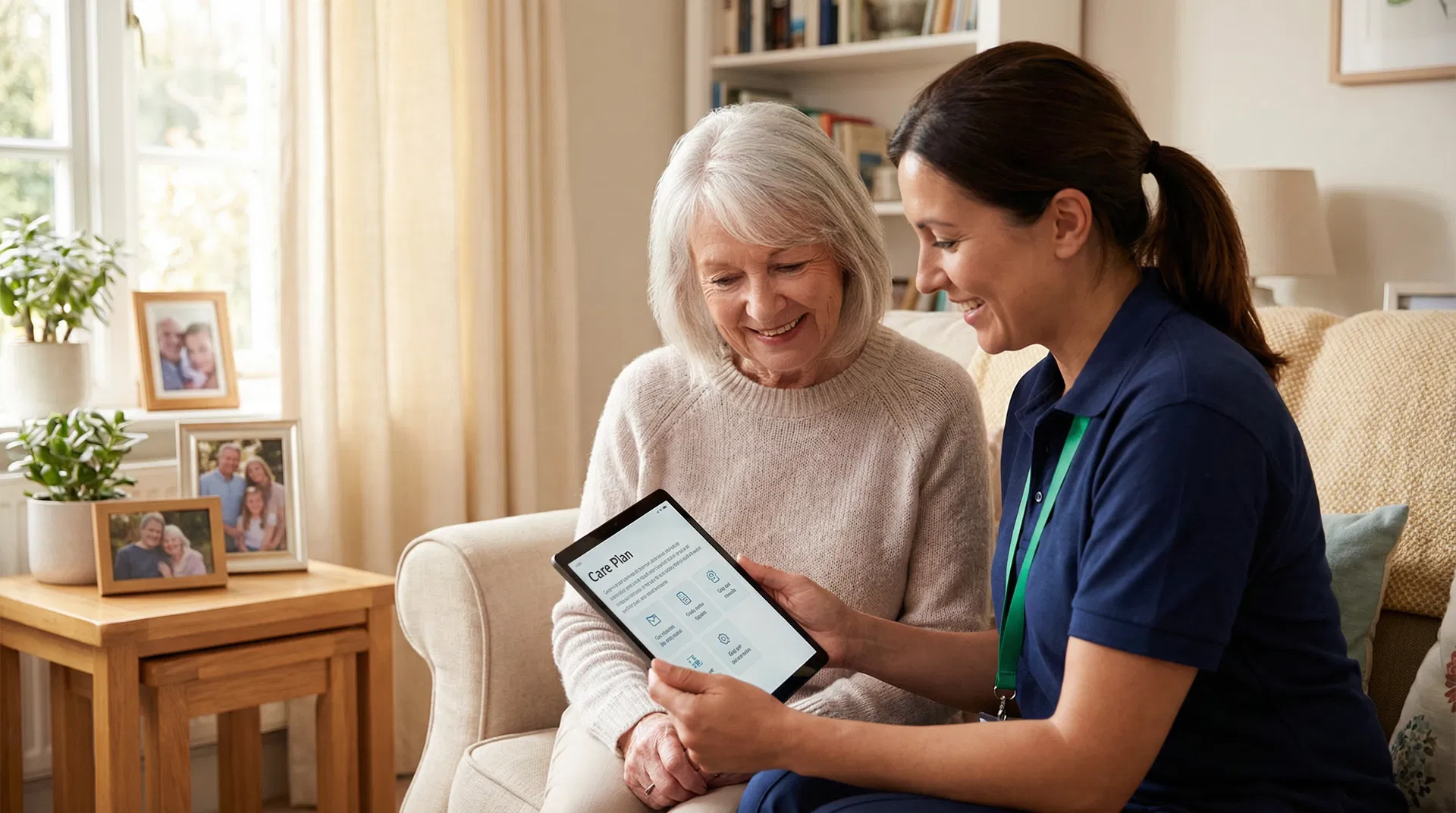
Maria's care plan was not a generic template. It was a comprehensive, digitally created document covering 22 distinct sections — from communication needs and delirium-specific carer guidance, to mobility assessments, medication management, skin integrity monitoring, nutrition and hydration tracking, continence care, sleep patterns, mental health and wellbeing, and daily activities.
Critically, the care plan was written in the first person — "I would like...", "How I want to be supported..." — honouring Maria's voice even during a period when her cognitive state was fluctuating. The platform ensured that every carer who visited Maria had instant access to this plan on their device, meaning there was no reliance on paper notes, no risk of outdated information, and no ambiguity about how Maria wanted to be supported.
The digital care plan also included a five-level prompting threshold system — a graduated approach from independent functioning through to escalation — which gave carers clear guidance on when to step in and when to encourage Maria's independence. This level of clinical detail, accessible in real time on every visit, is only possible with a purpose-built digital platform.
Real-Time Monitoring: Catching Changes Before They Escalate
One of the most significant risks in Maria's case was the potential for hospital readmission. Falls, delirium episodes, dehydration, and skin breakdown are all common triggers for emergency admissions in elderly patients — and each one was a documented risk in Maria's assessment.
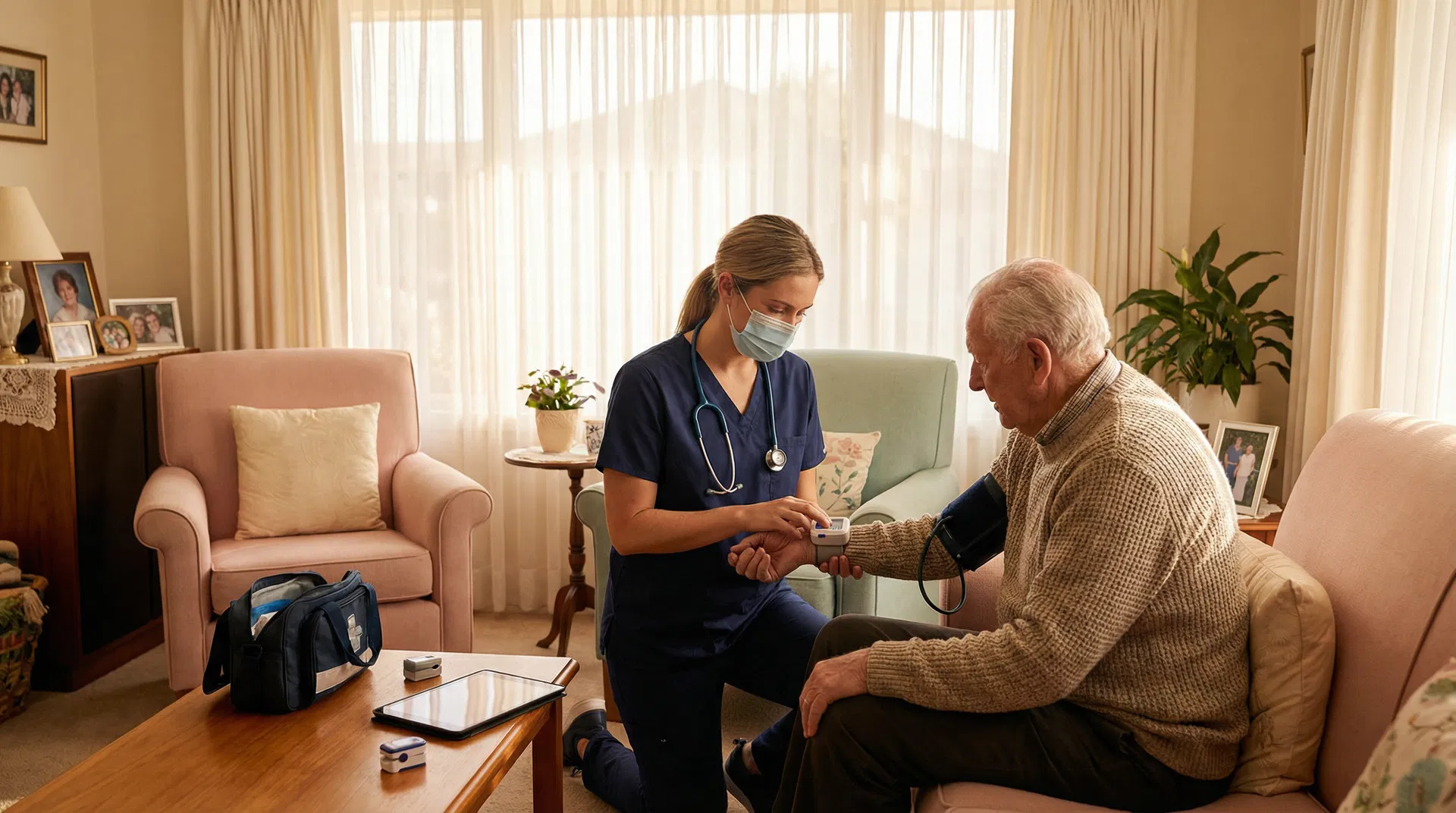
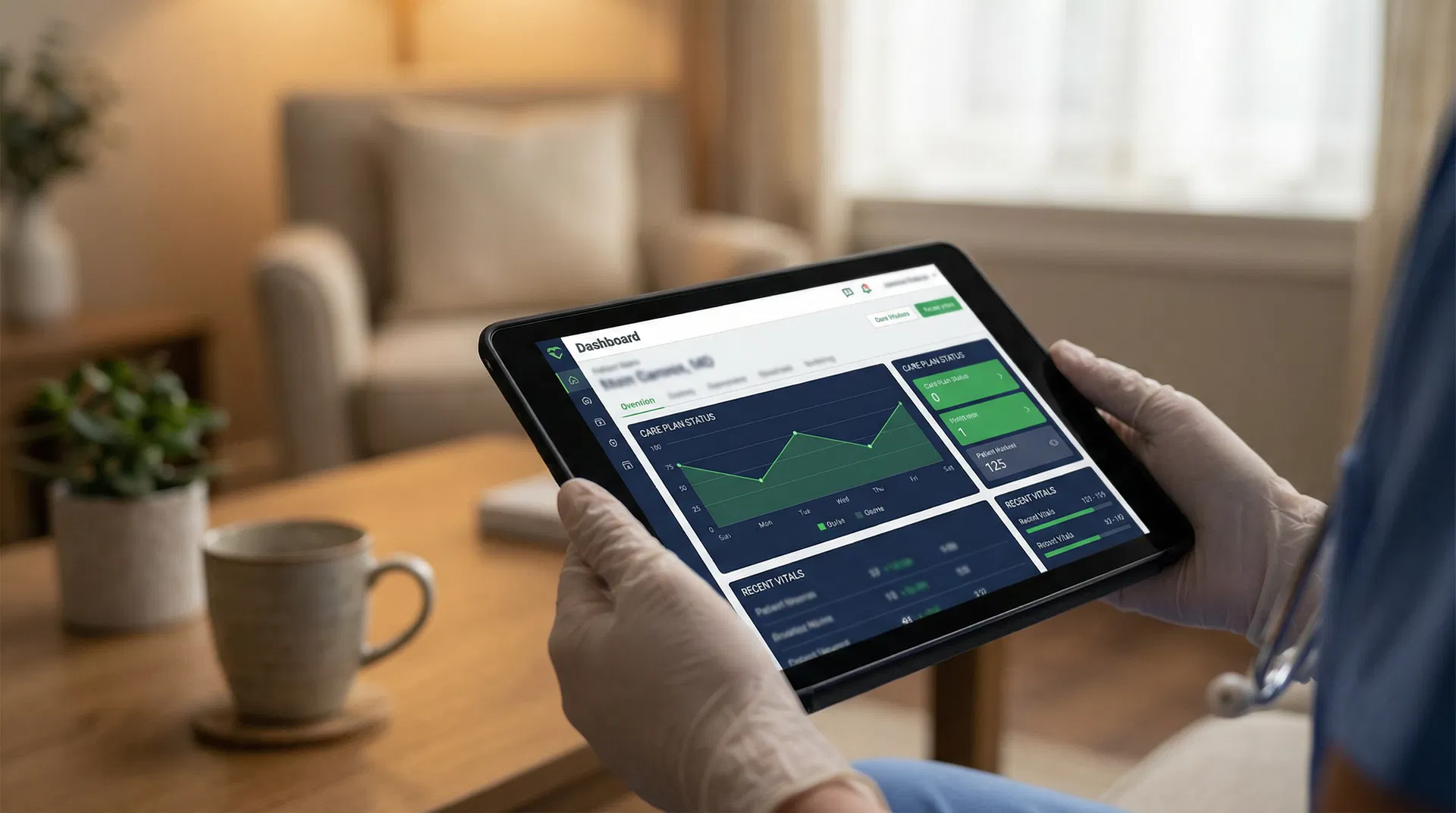
The DHS Care Platform's real-time monitoring and alert system played a crucial role in preventing these outcomes. Every visit was logged digitally, with carers recording observations about Maria's mental state, mobility, fluid intake, skin condition, and medication compliance. The system automatically flagged any changes or concerns — a missed medication, a change in behaviour, a new area of skin redness — and escalated them to the nurse-led management team immediately.
This meant that potential problems were identified and addressed within hours, not days. As our technology page explains, the platform provides 24/7 live monitoring across all 104+ active clients, with automated RAG (Red, Amber, Green) ratings that give the clinical team instant visibility into which clients need attention.
Want to see how our technology supports care at home? Explore the DHS Care Platform.
Rota Management: Consistency Through Dedicated Carers
For someone experiencing delirium, consistency is not just a preference — it is a clinical necessity. Unfamiliar faces, changing routines, and inconsistent approaches can exacerbate confusion and distress. Maria needed to see the same carers, following the same routines, at the same times.
The DHS rota management system made this possible. Unlike providers who rely on manual scheduling or agency staff, our platform uses an intelligent rota system that assigns dedicated carers to each client. Maria's care team was matched to her needs, her preferences, and her location — and the system ensured that the same carers returned for every visit.
The rota system also calculates travel times between visits, identifies scheduling gaps before they occur, and provides real-time conflict detection. This means that Maria's carers were never rushed, never late, and never unfamiliar with her needs. The result was a level of continuity that is simply not achievable without technology.
Family Communication: Transparency That Builds Trust
For Audrey, one of the most stressful aspects of her mother's care was the uncertainty. Was Maria eating properly? Was she sleeping? Had there been any episodes of confusion? Were the carers following the care plan?
The DHS Care Platform addressed these concerns through transparent, documented reporting. Every visit generated a digital care log that recorded exactly what care was delivered, any observations about Maria's condition, and any actions taken. Audrey received weekly updates from the care team, and the formal six-week review — conducted on schedule on 30 January 2026 — provided a comprehensive assessment of Maria's progress.
"This company's care was superb. Due to my mother's rapid decline in health, we needed someone to stay overnight they managed to get someone the same day we phoned."
K B
Client
Verified review from homecare.co.uk
This level of transparency is a cornerstone of The Divine Standard — our branded approach to care that guarantees a 30-minute callback on all enquiries and care commencement within 24 hours. Technology makes these guarantees possible by ensuring that information flows seamlessly between carers, coordinators, nurses, and families.
Prevention-First Approach: Zero Hospital Readmissions
The ultimate measure of Maria's care was whether the technology-enhanced approach actually delivered better outcomes. The answer was unequivocal: zero hospital readmissions.
Maria's care plan included specific prevention protocols for falls (non-slip footwear, gentle exercise, environmental checks), delirium management (speak slowly, use short sentences, engage on topics of her choice), skin integrity (daily monitoring and documentation), and medication safety (close monitoring, recording missed doses, escalation procedures). Every one of these protocols was tracked digitally, with the platform ensuring that nothing was missed and every intervention was documented.
The combination of nurse-led clinical oversight, dedicated carers, and real-time digital monitoring created a safety net that caught potential problems before they became emergencies. This is the power of technology in homecare — not replacing the human touch, but amplifying it with data, consistency, and accountability.
What Maria's Story Teaches Us
Maria's journey from hospital to home is a powerful illustration of what modern homecare can achieve when clinical expertise is supported by purpose-built technology. The key lessons are clear:
- Speed matters — the ability to conduct a same-day hospital assessment and commence care within six days was enabled by digital scheduling and care plan creation tools
- Consistency is clinical — intelligent rota management ensured Maria saw the same carers, following the same plan, at the same times
- Transparency builds trust — digital care logs and weekly family updates gave Audrey confidence that her mother was receiving excellent care
- Prevention saves lives — real-time monitoring and automated alerts caught potential problems before they escalated to hospital admissions
- Documentation protects everyone — a complete digital audit trail ensures accountability, compliance, and continuous improvement
At Divine Health Services, we invested significant resources, time, and energy into building the DHS Care Platform because we believe that technology should enhance — never replace — the human touch in care delivery. Maria's story is proof that this investment delivers real outcomes for real people.
To read Maria's full care journey, visit our detailed case study. To learn more about the technology that made it possible, explore our DHS Care Platform. And if you or a loved one needs care at home — whether it is home from hospital support, specialist homecare, or live-in care — we are here to help.
Looking for professional care at home? We're here to help.